

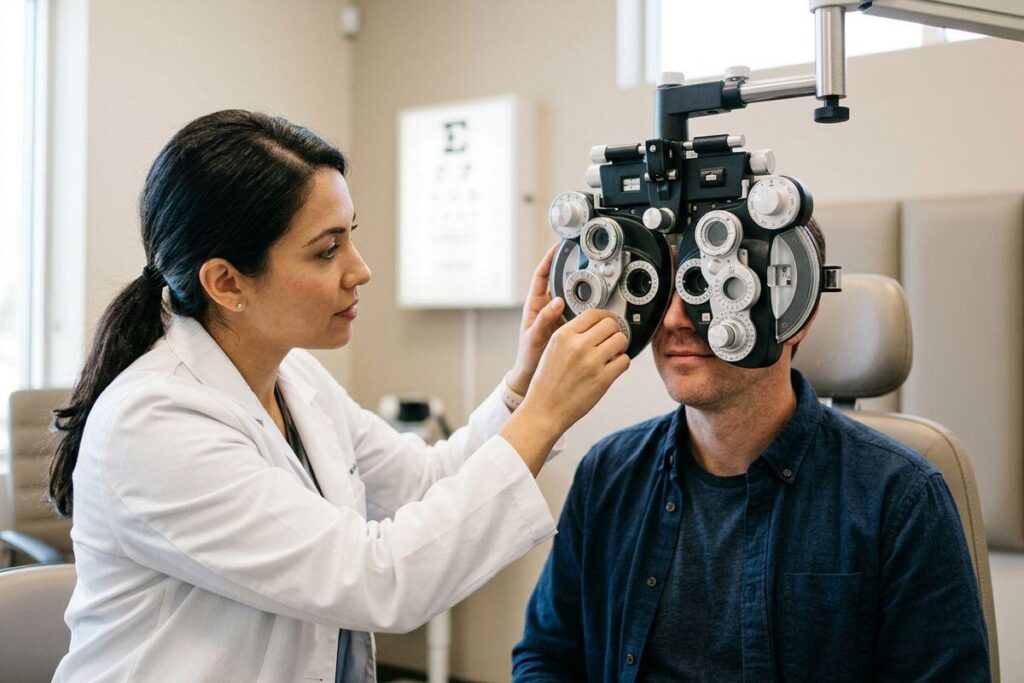
Plenty of people notice their vision turning fuzzier as the years go by, and they start wondering whether astigmatism is behind it. Fair question. A prescription that felt perfect 2 years ago can feel wrong today, which is part of why how often you book an exam makes such a difference.
Astigmatism can get worse over time, though steady eye care can help you keep up with the changes. Smaller clues count too, like halos around headlights at night.
What Astigmatism Does to Your Vision
A healthy cornea curves evenly, like a basketball, so light lands on one clean point on your retina. With astigmatism, the cornea or lens curves unevenly, closer to a football, and light scatters across several points instead.
That uneven curve can make things look smeared whether you’re reading a menu or squinting at a street sign down the block. Streetlights might stretch into long streaks after dark.
Signs You May Have Astigmatism
Mild cases can go unnoticed for years. Kids especially tend not to mention it, since blurry vision is the only vision they know. Watch for a few of these:
- Blurry or distorted vision at any distance
- Eye strain after focused work
- Headaches that build through the afternoon
- Squinting to sharpen whatever you’re looking at
- Glare or halos around lights while you drive at night
Does Astigmatism Get Worse Over Time?
Your eyes don’t hold the same shape forever. The cornea and lens can change slowly, so your astigmatism may increase, decrease, or stay the same for years.
Childhood is a common time for change, since growing eyes can alter shape as they develop. That’s one reason kids benefit from routine checkups. The cornea and lens can change again later in life, and adults and seniors often see their prescriptions adjusted.
For some people, the difference is small enough that a single prescription lasts a long time. Others notice it within a year or 2. And while long stretches of screen time won’t cause astigmatism, they can make an outdated prescription feel a lot more obvious.
What Can Worsen Astigmatism
A few things can push your corneal curve further off than gradual aging would. Age-related changes come first, since corneal tissue can lose some of its even shape over the decades.
An eye injury can alter the surface too, and so can corneal conditions like keratoconus, where the cornea thins and bulges into a cone shape.
Daily habits play a smaller role, but they add up. Rubbing your eyes puts pressure on the cornea, and doing it often may affect its shape. Untreated dry eye or seasonal allergies can leave your eyes irritated and your vision less stable from one hour to the next.

How to Keep Astigmatism Stable
You can’t control everything about how your eyes age, though a few habits can help. Book routine exams so your optometrist can measure your cornea’s curve and update your prescription as the numbers change.
Wear protective eyewear for sports, yard work, or any project that sends debris flying. Keep your hands off your eyes when they itch, and treat dry eye or allergies instead of waiting them out. If your glasses no longer feel right, mention it at your next visit. A small correction can ease the strain that builds up while you squint through an old lens.
When to See an Optometrist About Astigmatism
Some symptoms deserve a same-week appointment rather than a wait-and-see approach. Book a visit if you notice any of these:
- Sudden changes to your vision
- New blurriness that doesn’t clear up
- New floaters or flashes of light
- Eye pain or discomfort that lingers
Ways to Correct Astigmatism
You have several options to bring your vision back into focus, and the right one depends on your eyes and your lifestyle.
Glasses and Contact Lenses
Prescription glasses bend light before it reaches your eye, so images land more sharply on your retina. They’re the simplest starting point for most people, and you can update the lenses as your prescription changes. If night driving is your sore spot, ask about an anti-reflective coating to cut some of the glare bouncing off your lenses.
Contact lenses can do the same job. Toric lenses are designed specifically for astigmatism, and they come in soft and rigid versions, so you can find something that stays comfortable all day.
Surgery and Other Ways to Correct Astigmatism
Laser procedures like LASIK, PRK, and SMILE reshape the cornea so light focuses where it should. Your optometrist can walk you through whether your corneal thickness and prescription make you a good candidate.
Ortho-k lenses take a non-surgical route. You wear them overnight, and they gently reshape the cornea while you sleep. That means you can go through the next day without lenses in.
Toric implants are worth asking about if cataract surgery is somewhere in your future, since they can correct astigmatism while the cloudy lens gets replaced.
Stay Ahead of Changing Astigmatism
Astigmatism can drift over the years, and an exam can tell you where yours stands right now. Bring the details with you: when your vision started feeling off, what makes it worse, and how your current glasses hold up at night.
Our optometrists at Total Vision Chino Hills can check your corneal curve, update your prescription, and talk through correction options that fit how you live. Book your eye exam to see what’s changed.