

You may notice your child is having a tougher time in school than they used to. Maybe their attention wanders during class, or their grades have started to slip. Our team recognizes that, while many things can influence a child’s academic journey, one factor that sometimes gets overlooked is their vision.
Undetected or unmanaged myopia can have a direct impact on your child’s school performance. When the world is a blur, it creates challenges that go far beyond simply reading the chalkboard, making routine eye exams for children a crucial part of their academic support system.
What Is Myopia?
Myopia, also known as nearsightedness, is a common vision condition where you can see objects up close, but things farther away appear blurry. For a child, this means their textbook might be clear, but the presentation at the front of the room is out of focus. This condition often develops during childhood and can progress over time.
Common Signs to Watch For
You might notice your child showing specific behaviors that point to a vision problem. Pay attention if your child frequently:
- Squints or tilts their head to see the board or television
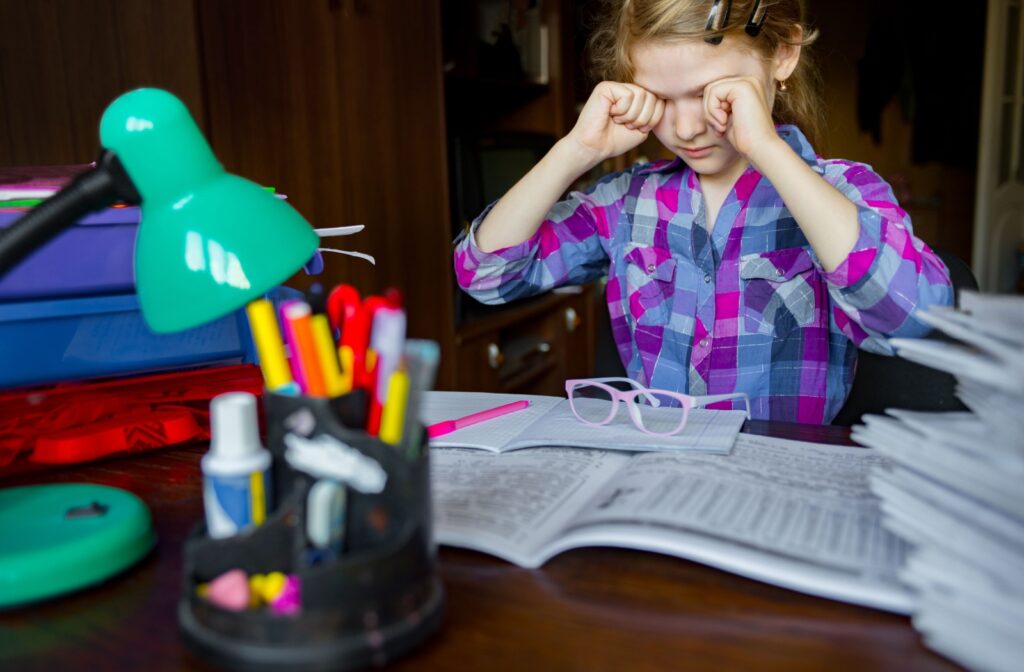
- Complains of headaches or tired eyes, especially after school
- Sits too close to screens or holds books near their face
How Nearsightedness Creates Classroom Hurdles
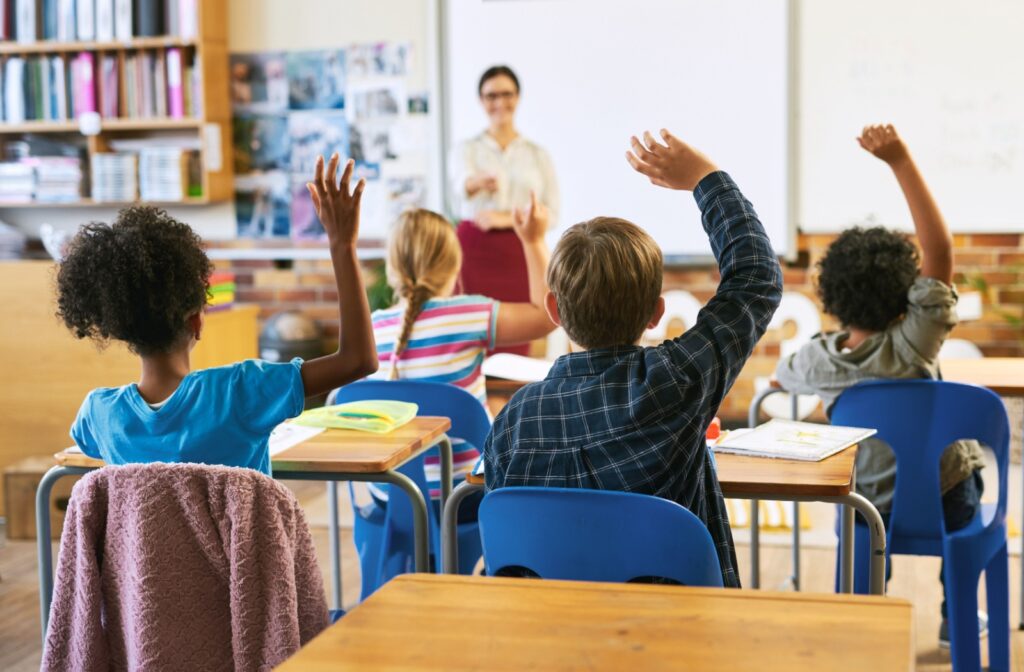
Imagine trying to follow a lesson when the words and pictures on the board are just a fuzzy smudge. For a child with myopia, this is a daily reality.
The struggle to see clearly can lead to frustration and a shorter attention span. A child who can’t follow along may lose interest and stop participating in class discussions. Sometimes, these behaviors can be mistaken for a learning difficulty or a lack of focus when the root issue is vision.
This difficulty can make it hard to keep up with notes, understand visual aids, and participate in learning activities, which highlights why having clear, comfortable vision is so important.
The Social and Emotional Side of Myopia
The challenges of myopia are not just academic. A child who feels they are falling behind can experience a dip in confidence. They might also feel “different” from their peers.
This can also affect their willingness to join in on fun activities. Your child may avoid sports or group games that require clear distance vision, which can impact their social connections and physical activity. For young athletes, services like sports vision therapy can help enhance performance.
How to Support Your Child’s Vision and Success
Supporting your child starts with being proactive about their eye health. Regular pediatric eye exams are the most direct way to detect and manage vision changes. Encouraging your child to spend more time playing outdoors can also be beneficial for their eyes.
If you have concerns about your child’s vision, a conversation with an eye doctor can provide clarity and a path forward. A professional can assess their specific needs and recommend the right steps.
Does Too Much Screen Time Cause Myopia?
Many parents wonder if screen time is to blame for vision issues. While extended near work—like using tablets, phones, or computers—can be a factor in eye strain, the exact relationship with myopia progression is still being explored. You can encourage healthy screen habits, like taking frequent breaks. A good guideline is the 20-20-20 rule: every 20 minutes, have your child look at something 20 feet away for 20 seconds.
Myopia Management and Treatment Options
When myopia is identified, there are several ways to help your child see clearly. Prescription eyeglasses and contact lenses are common solutions that can correct blurry distance vision. Beyond standard correction, myopia management options are available that aim to slow down its progression.
These can include specially designed contact lenses or orthokeratology (ortho-k), which involves wearing lenses overnight to gently reshape the front of the eye for clear vision during the day.
Find a Personalized Plan
Early detection gives you more options. A comprehensive eye exam can determine the right approach for your child’s lifestyle and vision needs. Management is focused on both providing clear sight today and supporting healthier eyes for the future.
Clear vision is a foundation for learning and growing. By staying on top of your child’s eye health, you give them a better opportunity to succeed both in and out of the classroom. To explore myopia management options for your child, schedule a consultation with our Total Vision Chino Hills team.